Awkward truth first: exercise is a poor way to lose weight on its own. A half-hour run burns roughly what's in a Twix, and the Twix takes ninety seconds. Food creates the deficit. Training decides whether you look lean or just smaller when the weight comes off — and it's what keeps the result from bouncing back.
So the question isn't 'what burns the most calories', it's 'what gives me the best body for the time I've got'. On that measure, some exercises are far better than others. Here's how we rank them at Atypical.
1. LIFTING — THE NON-NEGOTIABLE
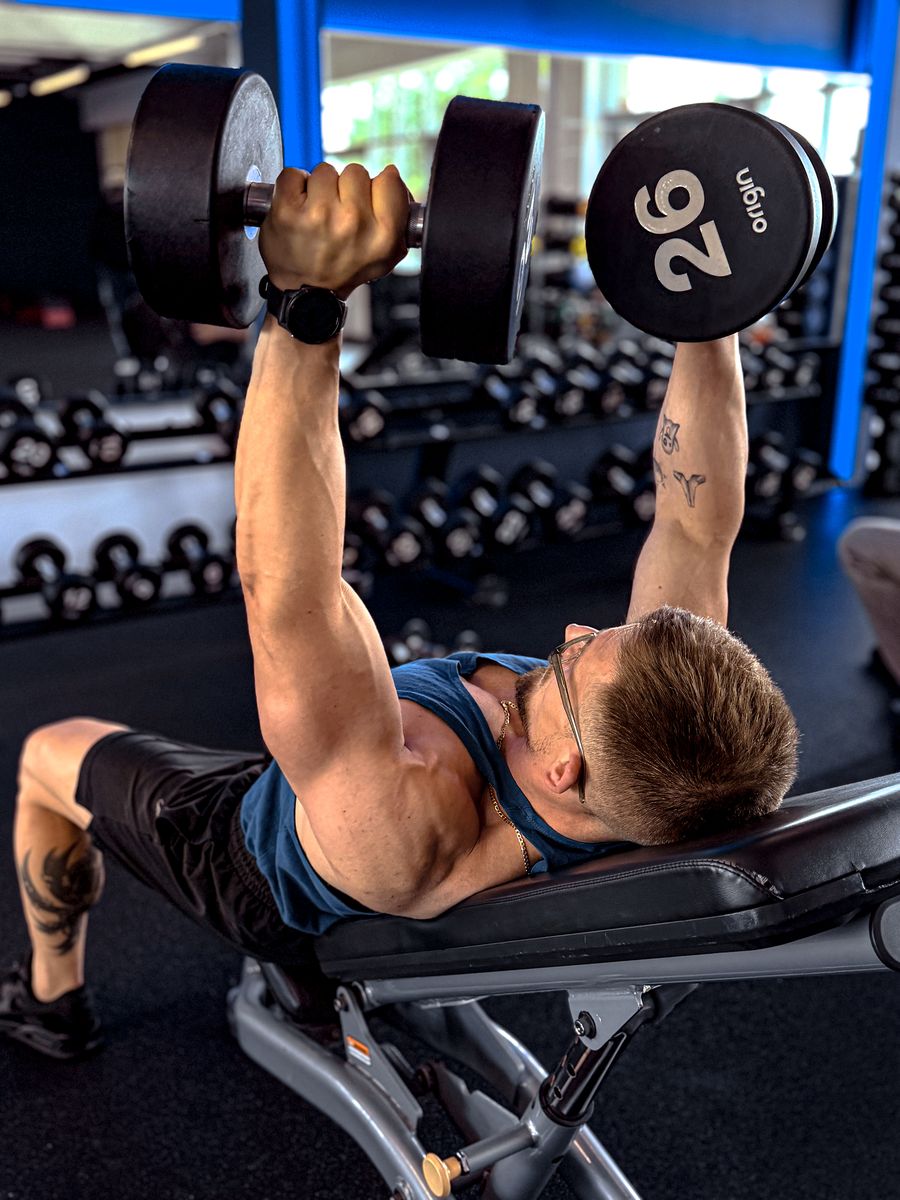
This might surprise you. Most people think cardio is the king of fat loss. It isn't. Resistance training — lifting weights, bodyweight exercises, using bands — is the single most valuable form of exercise for someone trying to lose weight. Here's why:
It builds and preserves muscle. When you're in a calorie deficit, your body doesn't just burn fat — it can also break down muscle for energy. Resistance training signals to your body that the muscle is needed, redirecting the deficit towards fat stores instead. Without it, up to 25% of weight lost can be muscle rather than fat.
It raises your resting metabolic rate. Muscle tissue burns more calories at rest than fat tissue. More muscle = higher daily calorie burn, even when you're sitting on the sofa. Over months, this adds up significantly.
It shapes your body. Cardio makes you a smaller version of your current shape. Resistance training changes your shape entirely — building the shoulders, arms, and legs that give a "toned" appearance. The "toned" look everyone wants is literally just muscle with less fat covering it.
Do this: 2–4 resistance sessions per week. Full-body or upper/lower split. Compound movements (squats, deadlifts, presses, rows) plus isolation work. Progressive overload — slightly more weight, reps, or sets over time.
2. WALKING — CRIMINALLY UNDERRATED
Walking is the most underrated fat loss tool. It burns meaningful calories (150–250 per 30 minutes depending on pace and terrain), it's easy on your joints, it doesn't spike hunger the way intense exercise can, and you can do it every single day without needing recovery.
A daily 30-minute brisk walk adds 1,000–1,750 extra calories burned per week. Over a month, that's roughly 0.5kg of additional fat loss — just from walking. Many of my most successful clients in Slough combine structured resistance training with a daily walking habit. It's the combination that produces the most consistent results.
Do this: Walk for 20–40 minutes daily. Brisk pace — you should be able to talk but not sing. Use your commute, lunch break, or post-dinner time. Track steps if it motivates you: 8,000–10,000 daily is a solid target.
3. INTERVALS — USEFUL, IN SMALL DOSES
Short bursts of intense effort followed by rest periods. HIIT is time-efficient and creates a significant calorie burn in a short session. It also produces an "afterburn effect" (EPOC) where your body continues burning elevated calories for hours post-workout.
However — and this is important — HIIT is demanding. If you're doing it properly, you can't do it every day. Two to three sessions per week maximum, and it should supplement your resistance training, not replace it. Many people think they're doing HIIT but are actually doing moderate-intensity continuous training, which doesn't produce the same metabolic effect.
Do this: 1–3 HIIT sessions per week. 20–30 minutes total. Genuine all-out effort during work intervals. Examples: sprint intervals, bike sprints, rowing intervals, circuit training with minimal rest.
4. STEADY CARDIO — FINE, JUST NOT THE PRIORITY
Running, cycling, swimming, cross-trainer at a moderate, sustained pace. This burns calories during the session but has minimal afterburn effect and doesn't build muscle. It's not bad — it's just not the most efficient use of your training time if fat loss is the primary goal.
Where steady-state cardio shines is cardiovascular health, mental health benefits, and as active recovery between resistance sessions. If you enjoy running, run. Just don't rely on it as your primary fat loss tool. Read our full comparison of different training approaches.
A WEEK THAT ACTUALLY WORKS
Based on what the evidence says and what I've seen work with hundreds of clients:
Monday: Resistance training — upper body focus
Tuesday: 30-min walk + optional HIIT (20 min)
Wednesday: Resistance training — lower body focus
Thursday: 30-min walk (recovery day)
Friday: Resistance training — full body
Saturday: 30-min walk + optional HIIT or active hobby
Sunday: Rest or gentle walk
That week, plus a sensible calorie target, is essentially the 12-week block we run at the studio. If you want it programmed for you rather than pieced together from the internet, come in for a free session.