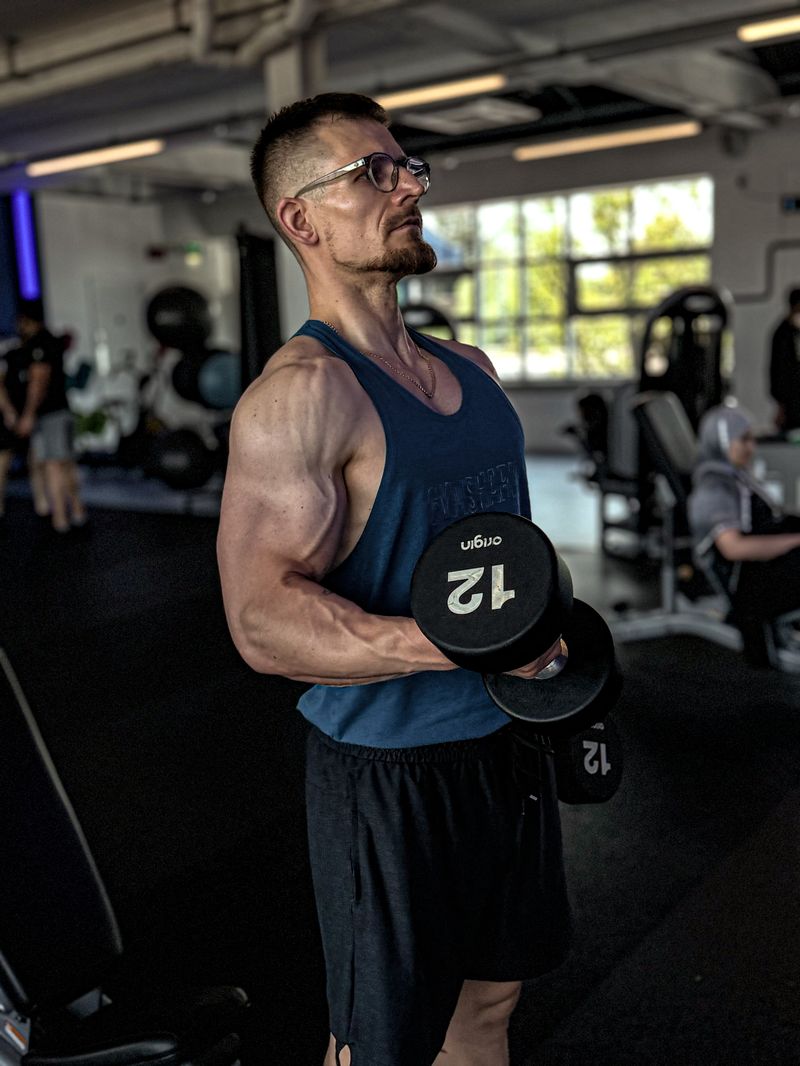
Some of the best transformations at Atypical have been people in their fifties who were told, usually by someone who'd never lifted a weight, that their lifting days were behind them. They weren't. Muscle responds to training at any age; what changes is the recovery, the warm-up and how much attention the joints need. That's a programming problem, and programming problems are solvable.
Here's what's actually different after forty, and what we do about it at the studio.
WHAT CHANGES AFTER 40
Recovery takes longer. At 25, you can train hard five days in a row and bounce back. At 45, you need more rest between intense sessions. This isn't weakness — it's physiology. Smart programming accounts for this with proper rest days and recovery strategies.
Muscle loss accelerates. From your 30s onwards, you lose 3–5% of muscle mass per decade if you don't actively maintain it. This is called sarcopenia, and it's the single biggest factor in age-related decline in strength, mobility, and independence. The good news: resistance training stops it in its tracks. People in their 60s and 70s can build new muscle — it just takes a bit more time.
Joint health matters more. Years of sitting, repetitive movements, or old injuries accumulate. Warm-ups become essential rather than optional. Exercise selection needs to account for any existing joint issues. And mobility work — which most people skip in their 20s — becomes a genuine priority.
Hormonal shifts affect body composition. Both men and women experience hormonal changes that can make fat storage easier and muscle building harder. This doesn't mean results are impossible — it means the approach needs to be more precise. Nutrition, sleep, and stress management become proportionally more important.
WHAT TO PRIORITISE
Strength training is non-negotiable. If you do only one type of exercise after 40, make it resistance training. It preserves muscle, strengthens bones (reducing osteoporosis risk), improves balance, supports joint health, and keeps your metabolism functioning well. Two to three sessions per week is the sweet spot.
Mobility and flexibility. Spending 10–15 minutes on mobility work each session prevents injuries and improves quality of life. Being able to squat fully, reach overhead, and rotate your spine without pain are functional abilities worth preserving.
Balance training. Falls are one of the leading causes of injury and loss of independence in older adults. Balance work — single-leg exercises, stability challenges, proprioception drills — should be woven into every programme from your 40s onwards.
Cardiovascular fitness. Heart health doesn't stop mattering because you're lifting weights. A mix of moderate steady-state cardio (walking, cycling) and occasional higher-intensity intervals keeps your cardiovascular system robust.
WHAT TO AVOID
High-impact everything. Jumping, running on concrete, and plyometrics can be hard on joints that have 40+ years of wear. This doesn't mean avoiding them entirely — but they should be dosed carefully and only when your joints are healthy enough to tolerate them.
Ego lifting. Going for personal bests at the expense of form is a recipe for injury at any age, but the consequences are more severe and recovery is slower after 40. Train hard, but train smart. Controlled tempo, full range of motion, and appropriate weight selection.
Ignoring warning signs. A sharp pain during exercise is not "pushing through." It's your body telling you something is wrong. Learn the difference between productive discomfort (muscles working hard) and problematic pain (joint or tendon distress). Any trainer worth hiring knows the difference.
REAL RESULTS OVER 40
Some of my best client results have come from people over 40. David (52) started training after a pre-diabetic diagnosis — within 20 weeks he was down three trouser sizes and his blood work was completely clear. James (41) is in better shape than he was at 25. Multiple clients in their 50s and 60s have improved their mobility, reduced chronic pain, and gained confidence they hadn't felt in decades.
The body you have at 40, 50, or 60 is still remarkably adaptable. It responds to training. It builds muscle. It loses fat. It gets stronger. You just need the right programme and the right guidance.
If you're over forty and want a programme that respects your joints without treating you like glass, book a free session. You'll be in good company.